Skip to content

Your questions, answered
Everything to know about medical-grade skincare, our products and the ScarSmooth™ System.
About Sunnie
Who is behind Sunnie?
SUNNIE was founded by Dr. Alexis Parcells, a board-certified plastic surgeon with more than 15 years of clinical experience. She created the line because she wanted clean products that deliver clinical results, for her own skin and to recommend to her patients.
What does “medical-grade skincare” mean?
“Medical grade” is an industry term rather than a regulated category, so it is a fair question. At SUNNIE it means our products contain a higher concentration of active ingredients than most over-the-counter brands, while still supporting the skin barrier.
Is Sunnie clean?
Yes. Our products are clean and clinically effective. We focus on ingredients that do a job rather than on unnecessary scents or fillers.
How is Sunnie different from drugstore or luxury skincare?
We are not focused on fragrance or on a perfect shade of pink. We are focused on products that are medically powerful and clinically effective, with active ingredients at meaningful concentrations rather than trace amounts.
What skin concerns can medical-grade skincare help with?
Medical-grade formulas are made to target specific concerns rather than just cleanse and moisturize. Common ones include acne, discoloration and dark spots, fine lines, redness and sun damage. If you are treating a diagnosed skin condition, check in with your dermatologist about the right routine.
Is luxury skincare the same as medical-grade?
Not necessarily. A higher price does not mean a higher concentration of active ingredients. What sets medical-grade skincare apart is the formulation: physician-developed, with actives at levels meant to do real work, rather than packaging or fragrance.
Why does the concentration of active ingredients matter?
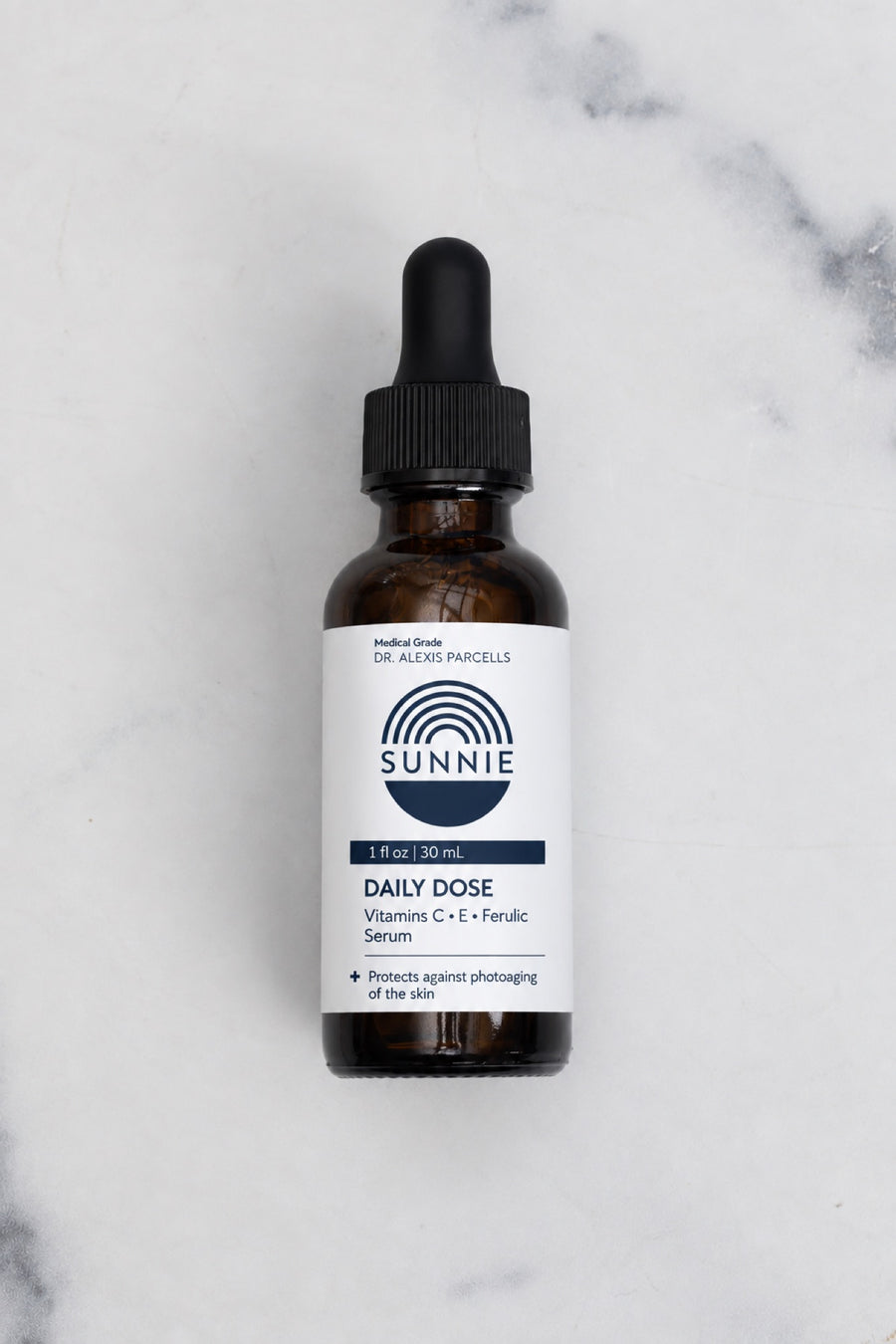
Active ingredients are the part of a formula that does the work, such as vitamin C, hyaluronic acid or ceramides. Trace amounts look good on a label but do little. Our formulas use meaningful concentrations while still supporting the skin barrier.
Choosing and using your products
Where should I start?
Start with the basics: a gentle cleanser, an antioxidant or moisturizer suited to your skin, and daily sun protection. Our Fresh + Clean cleanser, On the Daily moisturizer and The Protector SPF 40 are a simple place to begin, and you can add serums, an eye cream or a night cream as you go.
In what order should I apply my products?
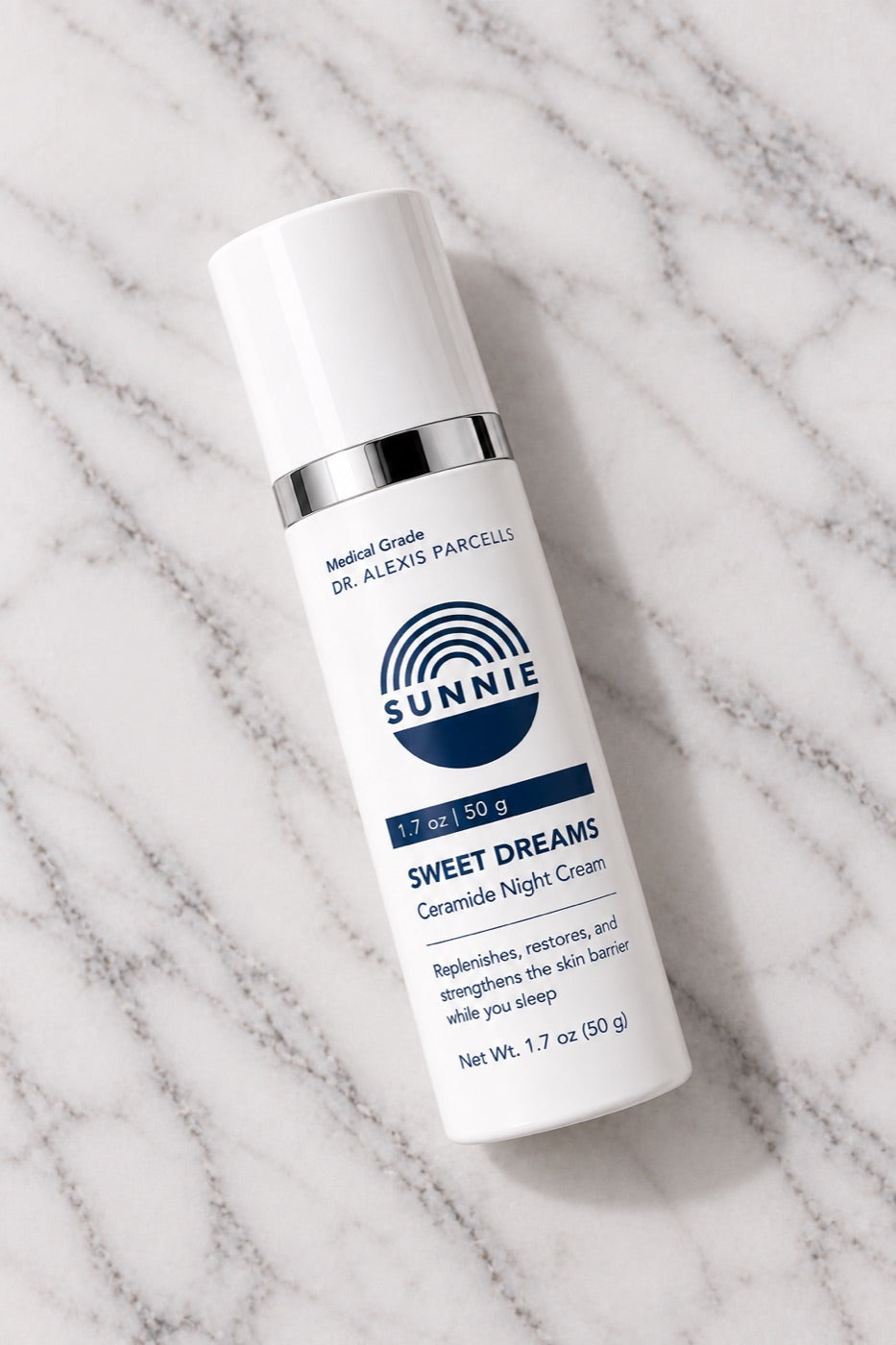
As a general guide: cleanse, apply serums, then moisturizer, and finish with sunscreen in the morning. At night, skip the sunscreen and use a night cream such as Sweet Dreams. Follow the directions on each product page.
Do I need to wear sunscreen every day?
Daily sun protection is one of the most important steps for long-term skin health. The Protector is a broad-spectrum SPF 40 face and neck sunscreen, and The Tinted Protector is a broad-spectrum SPF 50 with a hint of tint.
Can I use Sunnie if I have sensitive skin or a skin condition?
We recommend patch testing any new product and speaking with your dermatologist or clinician first if you have a skin condition, are pregnant or breastfeeding, or are under treatment.
Scars and the ScarSmooth™ System
What is the ScarSmooth™ System?
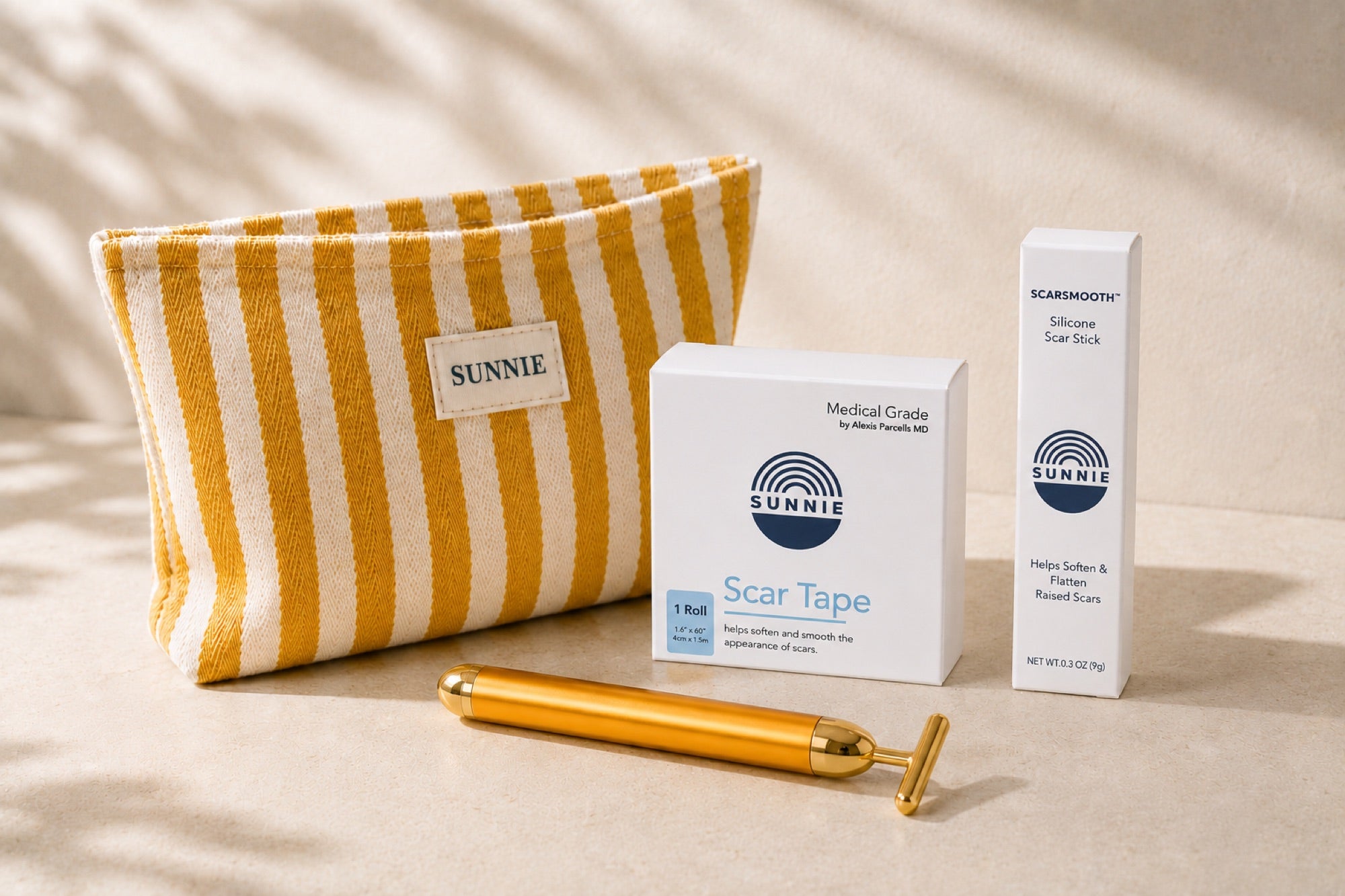
A 3-step solution designed to help soften, smooth and fade the appearance of scars. It combines the Silicone Scar Stick, the 24K Gold Vibrating Beauty Bar and medical-grade Scar Tape.
When can I start using it?
Use the ScarSmooth System only on healed wounds, with no openings. Start therapy about 3 weeks after surgery or injury, or when your clinician says the wound has healed.
How do I use the system?
After cleansing, apply a thin layer of the Silicone Scar Stick. Massage with the 24K Gold Vibrating Beauty Bar for 2 minutes. Then place customized Scar Tape over the scar, wearing it up to 23 hours daily.
How often should I use it, and can I reuse the tape?
Reapply up to 2x per day. You can reuse the same piece of tape for 5–7 days. Around month 6, treatment can usually be reduced to once every 24 hours.
How long does it take to see a difference?
Wounds heal about 10% each week, and scars are not fully mature until 18–24 months from the date of injury. Consistency matters, and scar healing can take up to 2 years.
Do I need sun protection on a scar?
Yes. Avoid sun exposure on the scar, or apply SPF 35 or higher directly on it.
What if my scar is not improving?
If your scar is not reducing in size, see a dermatologist or plastic surgeon to rule out a hypertrophic or keloid scar.
What causes a scar?
A scar is part of how skin heals. When the skin is injured, the body makes extra collagen to close and strengthen the area, and that new tissue looks and feels different from the skin around it. Good wound care, keeping the wound clean and covered while it heals, lowers the chance of a more noticeable scar.
What types of scars are there?
- Surgical scars from incisions, which change over many months as they mature.
- Acne scars, often pitted or indented (atrophic).
- Stretch marks from rapid changes in weight, including pregnancy.
- Hypertrophic scars: raised and thick, but staying within the original wound.
- Keloid scars: raised scars that grow beyond the edges of the original wound.
If you are not sure which type you have, a dermatologist or plastic surgeon can tell you.
Why silicone for scars?
Silicone gel and silicone sheets are among the most widely recommended options for scar care. They help keep the scar hydrated and protected, which helps soften and flatten raised scars and improve their appearance over time. That is why the ScarSmooth™ System pairs the Silicone Scar Stick with silicone Scar Tape.
What other scar treatments are there?
Depending on the scar, a dermatologist or plastic surgeon may suggest pressure dressings, steroid injections, laser treatments, microdermabrasion or scar revision surgery. Makeup can also camouflage a scar while it heals. Silicone-based care is a common place to start for most healed scars.
How should I care for a new scar?
While the wound heals, keep it clean and covered. Once it is fully closed, keep the scar moisturized, protect it from the sun with SPF 35 or higher, and be consistent with your scar care. Scars keep changing for 18–24 months, so it is never too late to start.
Orders and availability
What if a product is sold out?
Join the waitlist on the product page and we will email you the moment it is back. Restocks typically take about 2 weeks.
Still have questions?
Our team is happy to help you choose the right routine.